Domain WHOIS: A Complete Guide to Domain Registration Information
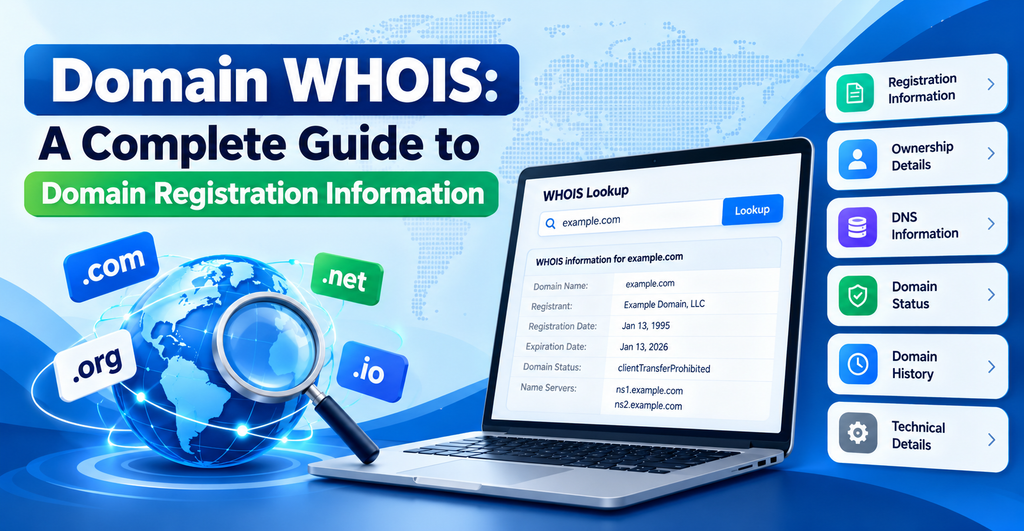
A Domain WHOIS lookup helps you check the registration information connected to a domain name. It can reveal the registrar, registration date, expiration date, nameservers, domain status, and sometimes ownership-related details when that information is publicly available. WHOIS is useful when researching a domain before purchase, checking whether a domain is active, preparing a transfer, investigating registration problems, or confirming where a domain is managed. It gives you administrative information about the domain rather than a complete picture of the website itself. What Is Domain WHOIS? Domain WHOIS is a registration information system used to retrieve public data about domain names. When a domain is registered, the registrar and registry maintain records related to that registration. A WHOIS lookup can help you identify: The amount of information available varies by domain extension, registry, registrar, and privacy policy. WHOIS should not be confused with DNS lookup. WHOIS focuses mainly on registration data, while DNS lookup focuses on technical records used to route website and email traffic. Why Is Domain WHOIS Important? WHOIS gives you a quick view of a domain’s administrative condition. This can be useful before buying, transferring, or troubleshooting a domain. For example, you may discover that a domain is close to expiration, locked against transfer, or using nameservers that do not match the expected configuration. Common uses include: For businesses managing multiple domains, WHOIS can also help identify registration records that need attention. What Information Can a WHOIS Record Contain? A WHOIS record may contain several fields, although not every field is always public. Typical information includes: Personal fields are frequently hidden or redacted. The most consistently useful information is usually the registrar, dates, nameservers, and domain status. What Is the Domain Registrar? The registrar is the company responsible for managing the domain registration. It normally handles: WHOIS can usually identify the registrar even if the owner’s identity is private. Knowing the registrar can be useful if you are trying to determine where a domain is managed or why a transfer is failing. Registrar vs Registry A registrar and registry are different. The registrar sells and manages domain registrations for customers. The registry maintains the central database for a specific domain extension. For example, when a user registers a domain, the registrar sends registration information to the appropriate registry. This distinction matters because WHOIS or RDAP data may contain information from both sources. What Does the Creation Date Mean? The creation date shows when the domain entered the registry. It can help you understand how long the domain has existed, but it does not prove that the current website or owner has been present since that date. A domain may have: For domain research, creation date should be combined with historical website and backlink analysis. What Does the Expiration Date Mean? The expiration date indicates when the current registration term is scheduled to end. If the domain is not renewed, it may eventually stop working. This can affect the website, email, subdomains, and any applications using that domain. An expired domain does not normally become available immediately. It may move through several recovery and deletion stages first. For important websites, domain renewal should be monitored separately from website hosting renewal. What Is the Updated Date? WHOIS records often contain an updated date. This indicates that some part of the domain registration record changed. It could relate to: However, the updated date does not always explain what was changed. It is best treated as an indicator that some registration-level modification occurred. What Are Nameservers in WHOIS? Nameservers identify the DNS servers responsible for the domain. For example: They help indicate where the domain’s DNS zone is managed. However, nameservers do not always reveal the hosting provider. A domain may use a dedicated DNS provider, CDN, or security service while the website is hosted elsewhere. This is why nameserver information should not be used alone to identify hosting infrastructure. What Are Domain Status Codes? Domain status codes provide information about restrictions and lifecycle conditions. They are useful when troubleshooting transfers, registration problems, or expired domains. clientTransferProhibited This usually means the domain is locked against transfer. The registrar may enable this status to protect the domain from unauthorized transfers. If you want to move the domain to another registrar, the transfer lock may need to be disabled first. clientUpdateProhibited This means certain registration data cannot currently be updated. It may be applied for security or administrative reasons. clientDeleteProhibited This status prevents the domain from being deleted while the restriction is active. It can provide additional protection against accidental or unauthorized deletion. clientHold A domain with clientHold may be removed from normal DNS publication. This can cause the website, email, and related services to stop resolving. The status may be connected to verification, billing, abuse, or registrar-level issues. redemptionPeriod This indicates that the domain has expired and entered a recovery phase. The previous registrant may still be able to restore the domain, usually through the registrar. Recovery can involve additional fees. pendingDelete A domain with pendingDelete is approaching removal from the registry. After deletion, it may eventually become available for registration again. Can WHOIS Reveal the Domain Owner? Sometimes. Older WHOIS records often exposed registrant information such as: Today, this information is frequently hidden or redacted. A WHOIS result may therefore show the registrar and technical details without showing the actual person or organization behind the domain. This is normal and does not mean the domain is anonymous to the registrar. Why Is WHOIS Information Hidden? WHOIS information may be hidden because of: Many registrars now redact personal data by default. Technical and administrative fields may remain visible even when personal ownership details are hidden. What Is WHOIS Privacy? WHOIS privacy prevents personal contact information from appearing publicly. It may hide: The registrar still maintains the actual registrant information internally. Privacy protection changes public visibility, not ownership or control of the domain. Can WHOIS Tell If a Domain Is Available? WHOIS can sometimes indicate whether a domain is registered, but availability
How Dwarf Therapist Works (Labors, Skills & Assignments Explained)

Introduction Dwarf Therapist operates as an external companion application that reads live memory data from a running Dwarf Fortress session. It translates raw game data into a structured, visual interface that allows players to manage dwarf labors, monitor skill levels, and handle assignments far more efficiently than the base game permits. Understanding how Dwarf Therapist works at a functional level helps players use it accurately and avoid common errors. The tool is not a mod and does not alter game files. It communicates with Dwarf Fortress through direct memory access, presenting and writing data in real time. Quick Facts about How a Dwarf Therapist Works What Dwarf Therapist Actually Does Inside Dwarf Fortress Dwarf Therapist does not inject code into Dwarf Fortress or install any files within the game directory. Its core function is memory reading and writing, which it performs through operating system level process access. This approach allows it to remain functional across game sessions without requiring modifications to the game files. When a player connects Dwarf Therapist to a running fort, the application locates specific memory addresses tied to dwarf data. These addresses hold information about each dwarf’s assigned labors, current skill ratings, stress levels, and attribute scores. How Memory Reading and Data Display Work Each release of Dwarf Therapist includes version-specific memory offset files. These files contain the mapped addresses corresponding to dwarf data structures in a particular build of Dwarf Fortress. When the application reads memory, it uses these offsets to locate and interpret the correct data for display. The interface populates a grid where each row is one dwarf and each column represents a labor or data category. Skill levels appear as color-coded cells, ranging from unskilled through novice, competent, skilled, and up to legendary tier. This visual system allows players to scan the entire population of a fortress at once rather than opening individual dwarf menus. How Labor Writes Are Processed by the Game When a player toggles a labor on or off within Dwarf Therapist, the application writes the updated value back to the corresponding memory address in the running game process. Dwarf Fortress reads this change during its next processing cycle. It is important to unpause the game briefly after making labor changes so that Dwarf Fortress can register and process the updated assignments. Changes written while the game remains paused indefinitely may not fully propagate until the game ticks forward. This is a commonly misunderstood aspect of how the two applications interact. Labors Explained: Categories, Assignments, and Best Practices Labors in Dwarf Fortress determine which tasks each dwarf is eligible to perform. A dwarf with the mining labor enabled will pick up mining jobs when they appear in the job queue. Without that labor enabled, the dwarf will ignore all mining tasks regardless of their skill level. Dwarf Therapist organizes labors into logical groupings within the grid, making it straightforward to identify which categories are assigned to which dwarves. Common labor categories include mining, woodcutting, hauling, farming, crafting, medical, and construction. Understanding the Labor Grid Layout The labor grid is the central element of the Dwarf Therapist interface. Each column header identifies a specific labor, and each row represents one dwarf in the active fort. A filled or highlighted cell indicates that labor is currently enabled for that dwarf. Players can interact with the grid in several ways: Labor Category Examples Included Typical Assignment Strategy Mining Mining Assign only to dwarves with mining skill Woodcutting Woodcutting Limit to designated woodcutters Hauling Stone, Wood, Food, Refuse Broad assignment across general population Farming Farming, Plant Gathering Assign to dedicated agricultural dwarves Crafting Stonecrafting, Weaving, Smithing Match to skilled specialists Medical Surgery, Diagnosis, Wound Dressing Assign to dedicated medical staff only Construction Masonry, Carpentry, Architecture Assign to skilled builders Cleaning Cleaning Broad or general assignment recommended Common Labor Assignment Problems and Solutions Players frequently make errors in labor configuration that lead to inefficient forts. The following issues are among the most reported: Skills and Attributes: Reading and Using the Data Effectively Skill data in Dwarf Therapist is pulled directly from game memory and displayed numerically alongside color indicators. Each skill in Dwarf Fortress has a rating that progresses from level 0, which represents no skill, through to level 20, which represents a legendary plus five rating. Dwarf Therapist makes this data scannable by applying color gradients to skill cells. Players do not need to open each dwarf individually to assess whether a candidate is suitable for a skilled role. The grid provides a population-wide overview in a single view. Skill Tiers and What They Mean for Labor Decisions Understanding skill tiers helps players make smarter labor assignments rather than defaulting to random configurations: Attributes displayed in Dwarf Therapist, including strength, agility, toughness, and focus, provide additional context for labor decisions. A dwarf with high focus is a stronger candidate for engraving or gem cutting. A dwarf with high strength and toughness is better suited to physically demanding roles. Stress Indicators and Personality Data in Dwarf Therapist Dwarf Therapist surfaces stress-related data alongside skill information. Stress in Dwarf Fortress accumulates when dwarves experience negative thoughts, witness death, go without food or sleep, or are assigned to roles that conflict with their personality preferences. High stress levels displayed in a Dwarf Therapist are an early warning sign that a dwarf may be approaching a mental breakdown. Players can use this data to intervene before the dwarf becomes a threat to the fort or loses functionality. Personality facets, such as whether a dwarf values craftsmanship or dislikes working outdoors, are also accessible through the dwarf detail view. Aligning labor assignments with personality preferences, where possible, helps reduce stress accumulation over time. Custom Professions, Sorting, and Advanced Assignment Tools Custom professions are one of the most powerful features Dwarf Therapist offers beyond basic labor toggling. A custom profession is a saved labor configuration that can be named, stored, and applied to any number of dwarves instantly. A player might create a profession called “Hauler” with only hauling and cleaning
Dwarf Therapist Supported Versions (Steam & Classic)
Introduction Dwarf Therapist is a version-dependent application, meaning each release is built to work with a specific Dwarf Fortress version or build range. Understanding which versions are supported and how support differs between the Steam edition and the Classic edition of Dwarf Fortress is essential before downloading or updating the tool. Version mismatches are the single most common cause of errors, blank data grids, and application instability when using Dwarf Therapist. Checking compatibility before launch is a straightforward step that prevents most reported setup problems. Quick Facts about Dwarf Therapist Supported Versions What Version Compatibility Means in Dwarf Therapist Version compatibility in Dwarf Therapist refers to the alignment between the memory offset data bundled with a specific Dwarf Therapist release and the internal memory structure of a particular Dwarf Fortress build. When these two match, Dwarf Therapist can accurately locate, read, and write dwarf data within the game’s running process. Each time Dwarf Fortress is updated, Bay 12 Games may alter how data is stored in memory. Even minor game patches can shift memory addresses enough to render an existing Dwarf Therapist release incompatible. This is not a flaw in Dwarf Therapist but a structural consequence of how the tool functions. How Memory Offsets Define Compatibility Memory offset files are configuration files included within each Dwarf Therapist release. They contain precise addresses that map to dwarf attributes, labor assignments, skill ratings, and other data fields inside the game’s memory. These offsets are specific to a single Dwarf Fortress version and cannot be reused across different game builds without manual updates. When community maintainers release a new version of Dwarf Therapist following a Dwarf Fortress update, the primary task involved is updating these offset files to reflect the new memory structure. The core application code changes less frequently than the offset data does. What Happens When Versions Do Not Match Using a mismatched Dwarf Therapist release against an incompatible Dwarf Fortress version produces predictable problems. Players will typically encounter one or more of the following: None of these outcomes cause permanent damage to a save file, but they do render Dwarf Therapist non-functional until the correct version is used. Steam Edition vs Classic Edition: Key Differences in Support The Steam edition of Dwarf Fortress, co-published by Kitfox Games in December 2022, introduced a significantly updated version of the game with an official graphical interface, music, and sound. While the core simulation remained consistent with the Classic edition, the underlying build structure differed enough to require dedicated compatibility work from Dwarf Therapist maintainers. The Classic edition remains available for free from the Bay 12 Games website and continues to receive updates on its own schedule. Both editions are active and both are supported by Dwarf Therapist, though the pace and timing of updates can differ between the two. Steam Edition Compatibility Considerations The Steam edition tends to update more frequently than the Classic edition, in part because it is distributed through Steam’s update infrastructure and benefits from the commercial release model. Each update has the potential to break Dwarf Therapist compatibility until community maintainers publish revised offset files. Players using the Steam edition should follow these practices to maintain stable Dwarf Therapist functionality: Feature Steam Edition Classic Edition Update frequency Higher, through Steam infrastructure Lower, manual downloads from Bay 12 Games Dwarf Therapist support Supported, requires version verification Supported, historically stable compatibility Compatibility gap risk Higher due to frequent updates Lower due to less frequent releases Official graphical interface Yes, included No, ASCII or community tilesets Source for game updates Steam client Bay 12 Games website Dwarf Therapist source GitHub community releases GitHub community releases Classic Edition Compatibility Considerations The Classic edition of Dwarf Fortress updates less frequently than the Steam edition, which historically meant that Dwarf Therapist compatibility gaps were shorter and less disruptive for Classic users. When a new Classic version is released, the community typically publishes updated Dwarf Therapist offset files within a reasonable timeframe. Players using the Classic edition benefit from a more predictable compatibility cycle, but they should still verify version alignment rather than assuming backward compatibility exists between releases. An older Dwarf Therapist build designed for a previous Classic version will not automatically work with a newer one. Finding and Verifying the Correct Dwarf Therapist Version The correct process for identifying the right Dwarf Therapist release begins with knowing the exact version number of your current Dwarf Fortress installation. This information is typically displayed on the Dwarf Fortress main menu or loading screen and follows a numeric format such as 50.13 or 47.05. With that version number confirmed, players should visit the Dwarf Therapist GitHub releases page and locate the release whose notes explicitly list support for that Dwarf Fortress version. Release titles and descriptions on the GitHub page generally include the supported game version number to make this identification straightforward. Step-by-Step Version Verification Process Follow this process before downloading or updating Dwarf Therapist: Common Version-Related Problems and Solutions Players frequently encounter the following version-related issues: Long-Term Version Management and Community Support Dwarf Therapist is maintained entirely by volunteer open-source contributors. There is no commercial team behind the project and no guaranteed update schedule. Support depends on the availability and capacity of community developers who maintain the memory offset files and core application code. This community-driven model means that compatibility gaps can occur, particularly immediately after major Dwarf Fortress releases. Understanding this dynamic helps players set realistic expectations and avoid frustration when a compatible release is temporarily unavailable. How the Community Maintains Version Support When Dwarf Fortress releases a new version, community contributors begin the process of identifying updated memory addresses within the new build. This involves reverse engineering or memory scanning techniques to locate the data structures that Dwarf Therapist depends on. Once the correct offsets are identified, they are compiled into an updated configuration file and submitted to the Dwarf Therapist repository. Maintainers review and merge these contributions, then publish a new release. The timeline for this process varies depending on the complexity of the changes in
Dwarf Therapist Features You Should Know (Reports, Filters, Profiles)
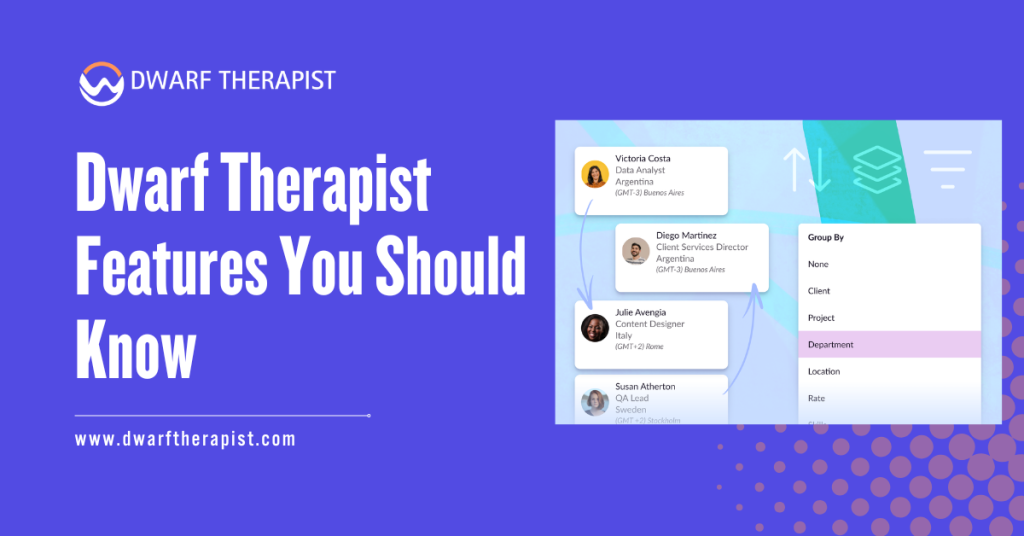
Introduction Dwarf Therapist offers a set of features that extend well beyond basic labor toggling. Reports, filters, and profiles form the core of its advanced functionality, giving players precise control over how dwarf data is viewed, organized, and applied across an entire fortress population. Many players use Dwarf Therapist for years without fully exploring these tools. Understanding what each feature does and when to use it transforms the application from a simple labor grid into a genuinely powerful fort management system. Quick Facts about Dwarf Therapist Features What Reports in Dwarf Therapist Show and How to Use Them Reports in Dwarf Therapist are structured summaries of data pulled from the current game session. They are designed to give players a fast, high-level view of workforce composition, skill distribution, and labor coverage without requiring manual inspection of individual dwarves. The reporting functionality addresses one of the most persistent challenges in Dwarf Fortress management: maintaining awareness of what your population is capable of and where critical gaps exist before those gaps cause failures in production or defense. Types of Data Visible in the Report View The report view aggregates data across all dwarves currently loaded in the roster. Key information categories accessible through reporting tools include: Using report data effectively means acting on what it reveals. A report showing only one dwarf with a medical skill above a competent level is an actionable finding. It tells the player that the fortress is one injury away from having no functional medical coverage, prompting immediate cross-training or labor reassignment. Common Report-Related Problems and Solutions Players frequently misread or underuse report data in ways that lead to avoidable fort management problems: Filters: Narrowing Your Roster for Precision Management The filter system in Dwarf Therapist is one of its most practical features for players managing medium to large fortress populations. Filters reduce the visible roster to only the dwarves that meet specified criteria, allowing focused management without distraction from the full population. Without filters, a fortress with 60 or more dwarves requires significant scrolling and manual scanning to locate specific individuals or groups. Filters eliminate that friction entirely by surfacing only the dwarves relevant to the current management task. How Filters Work and What Criteria Are Available Filters in Dwarf Therapist operate by applying one or more conditions to the roster display. Dwarves that do not meet the active filter criteria are hidden from view until the filter is cleared or modified. Available filter criteria typically include: Filter Type Primary Use Case Best Applied When Skill tier Finding qualified specialists Assigning high-value workshop roles Stress level Identifying at-risk dwarves Population is large and manual scanning is slow Migration wave Configuring new arrivals Immediately after a migration event Profession Reviewing role distribution Auditing labor balance across the fort No labors assigned Finding unassigned dwarves After large migration waves or save loads Attribute range Matching dwarves to demanding roles Optimizing specialist assignments Combining Filters and Sorting for Advanced Roster Management Filters become significantly more powerful when combined with the Dwarf Therapist’s sorting tools. Sorting arranges the filtered roster by a selected data column, while the filter determines which dwarves are visible. Using both together allows for highly specific roster views. A practical example of combined filtering and sorting would be filtering the roster to show only dwarves with medical labor enabled, then sorting by the diagnosis skill column to identify which of those dwarves has the highest diagnostic ability. This workflow takes seconds in Dwarf Therapist and would require multiple individual menu navigations within the base game to replicate. Filters do not permanently remove dwarves from Dwarf Therapist. Clearing the active filter instantly restores the full roster view. Players can switch between filtered and unfiltered views at any point without affecting game data. Profiles and Custom Professions: Saving and Reusing Labor Configurations Profiles and custom professions are the features in Dwarf Therapist that deliver the greatest time savings for experienced players. A custom profession is a named labor configuration that can be created once and applied repeatedly to any dwarf in any fort session. The distinction between a profile and a profession in Dwarf Therapist varies slightly by version and implementation, but both refer to a saved labor template. For practical purposes, players create these templates to represent the roles their fortress uses regularly, such as miners, haulers, farmers, crafters, and medical staff. Creating Effective Custom Profession Templates Building useful custom profession templates requires thinking about role clarity before configuration. Each profession should represent a clearly defined role with a coherent set of labors that do not conflict with the intended function of that role. Recommended practices for building custom professions include: Applying Profiles During Active Fort Management Applying a saved custom profession to one or multiple dwarves in Dwarf Therapist is a rapid process. Select the target dwarves in the roster grid, access the profession list through the right-click context menu or the profession management panel, and apply the chosen template. All labor states for the selected dwarves update immediately based on the saved configuration. The profile application is most impactful at three specific points in fort management. The first is immediately after a migration wave, when new dwarves arrive with default or random labor configurations that rarely match the fortress’s actual needs. The second is during a workforce restructuring, when the player decides to shift population balance between skilled roles and general labor. The third is when rebuilding after a fort crisis, such as a siege or disease outbreak, that significantly alters the composition of the available workforce. Applying a custom profession overwrites the current labor configuration of the selected dwarves entirely. Players should confirm that the target dwarves do not have unique manual configurations worth preserving before applying a template. There is no undo function once a profession is applied and written to game memory. Frequently Asked Questions Latest Post:
Is Dwarf Therapist Safe? Security, Mods & Stable Downloads

Introduction Dwarf Therapist is a well-established tool in the Dwarf Fortress community with a long history of open-source development and community oversight. For new players encountering it for the first time, questions about safety, security, and download reliability are entirely reasonable given that the application requires memory access permissions that are uncommon in standard software. Understanding exactly what Dwarf Therapist does at a technical level, where safe downloads come from, and how to distinguish the legitimate application from unverified third-party builds answers the most important safety questions before installation. Quick Answer about Is Dwarf Therapist Safe? What Does Safe Mean in the Context of Dwarf Therapist Safety in the context of Dwarf Therapist covers three distinct concerns. The first is whether the application poses a risk to the operating system or personal data. The second is whether it can damage Dwarf Fortress save files. The third is whether downloads from available sources can be trusted to contain only the expected code. Each of these concerns has a clear answer when Dwarf Therapist is obtained from its official source and used as intended. Conflating these separate concerns is a common source of confusion for players new to the tool. Memory Access and Why Antivirus Tools May Flag It Dwarf Therapist reads and writes to the memory of another running process, specifically the Dwarf Fortress executable. This behavior is technically similar to that of some categories of malicious software, which is why antivirus and security tools occasionally produce warnings when Dwarf Therapist is installed or launched. This flagging behavior does not indicate that Dwarf Therapist is malicious. It reflects that security software uses behavioral heuristics that treat process memory access as a potential risk signal, regardless of the application’s actual purpose. The official Dwarf Therapist release contains no malicious code, and its full source is publicly available for independent verification. Players who receive an antivirus warning after downloading Dwarf Therapist from GitHub should take the following steps before proceeding: What Dwarf Therapist Does Not Do Understanding the boundaries of what a Dwarf Therapist actually does is as important as understanding what it does do. The application operates within a narrow and well-defined functional scope: Dwarf Therapist and Mods: Compatibility and Interaction Dwarf Therapist is not a mod in the conventional sense. It does not alter game content, add new mechanics, or inject code into the Dwarf Fortress executable. It operates as a fully external application that communicates with the game via memory access rather than through any modding interface or file modification. This distinction matters because it affects how Dwarf Therapist interacts with actual Dwarf Fortress mods. Players who run modded versions of Dwarf Fortress need to understand how Dwarf Therapist behaves in that context. Using Dwarf Therapist Alongside Dwarf Fortress Mods Dwarf Therapist compatibility with modded Dwarf Fortress installations depends on whether the mod alters the game’s memory structure or binary. Most content mods, including those that add new creatures, materials, reactions, or interface changes, do not affect the underlying memory structures that Dwarf Therapist reads. In these cases, Dwarf Therapist functions normally alongside the mod. Mod Type Dwarf Therapist Compatibility Notes Content mods (creatures, materials) Generally compatible Memory structure unchanged Interface or graphics mods Generally compatible Does not affect labor memory DFHack integration Compatible with configuration DFHack and Dwarf Therapist can run together Binary patching mods Potentially incompatible May shift memory addresses Total conversion mods Verify per release Depends on extent of binary changes Vanilla unmodded installation Fully compatible Standard supported configuration DFHack is a separate and widely used Dwarf Fortress modding framework that also uses memory access. Dwarf Therapist and DFHack can be run simultaneously without conflict in most configurations. Players using both tools should ensure that each is matched to the same Dwarf Fortress version to avoid data inconsistencies. Risks of Using Unofficial or Modified Dwarf Therapist Builds The primary security risk associated with Dwarf Therapist does not come from the official application itself. It comes from unofficial or modified builds distributed through channels other than the official GitHub repository. Because Dwarf Therapist requires memory access permissions that users must actively grant, a malicious build could theoretically exploit those permissions in ways the official release does not. Players should treat any Dwarf Therapist download from outside the official GitHub repository with significant caution. Common unofficial distribution channels to avoid include: Stable Downloads: Where to Get Dwarf Therapist Safely The only recommended source for Dwarf Therapist downloads is the official GitHub repository maintained by community contributors. The repository URL has been consistently used by the project, and all legitimate releases are published there with release notes, version information, and, in some cases, file hash data for verification. Identifying a stable release on GitHub involves reading the release notes carefully rather than simply downloading the latest release. Stable releases are typically labeled as full releases rather than pre-release or development builds. Pre-release builds may contain incomplete memory offsets or untested code changes that produce unreliable behavior. How to Identify a Stable and Verified Release Follow this process when selecting a Dwarf Therapist download to ensure you are obtaining a stable, verified build: Common Download and Installation Problems and Solutions Players frequently encounter the following issues when obtaining and installing Dwarf Therapist: Long-Term Safety Practices for Dwarf Therapist Users Maintaining safe and stable use of Dwarf Therapist over time requires a small number of consistent habits. The most important of these is treating the official GitHub repository as the single authoritative source for all downloads and update information, without exception. The project’s open-source nature is its most significant safety asset. Any player with sufficient technical knowledge can review the entire codebase, and the community of experienced contributors provides ongoing oversight, making undetected malicious code changes extremely unlikely in official releases. Best Practices for Ongoing Safe Use Players who use Dwarf Therapist regularly should maintain the following practices: Frequently Asked Questions Latest Post:
Dwarf Therapist vs In‑Game Manager Tools (Pros & Cons)
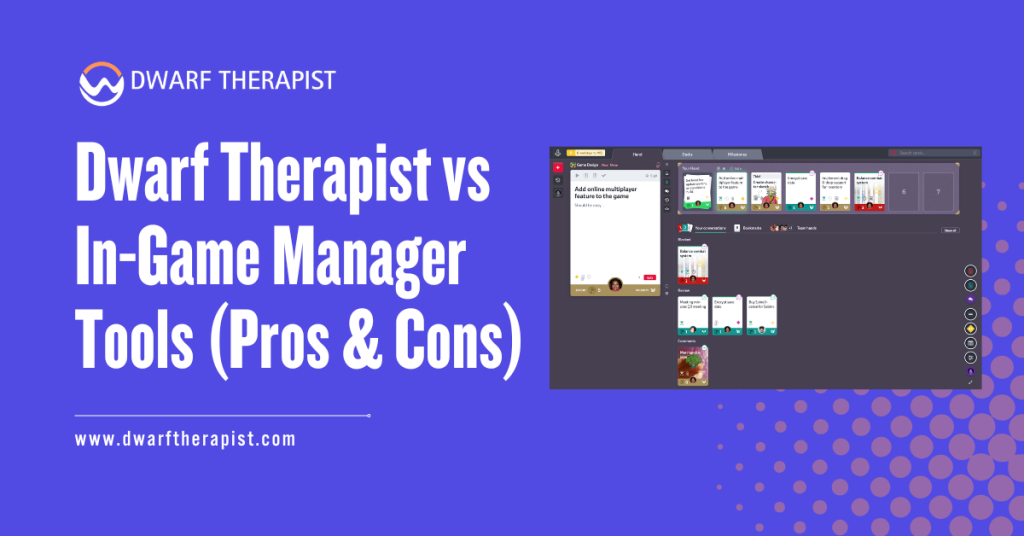
Introduction Managing a Dwarf Fortress colony is one of the most complex challenges in simulation gaming. The game’s depth, particularly around labor assignments, skill tracking, and dwarf psychology, has pushed players to seek tools beyond what the base game provides. Two primary approaches exist: Dwarf Therapist, a long-standing third-party utility, and the native in-game manager tools built directly into Dwarf Fortress itself. Both approaches serve the same core purpose but function very differently in practice. Understanding their respective strengths and limitations helps players make informed decisions about how they manage their fortress operations. This editorial is based on community-informed analysis, documented tool behavior, and practical gameplay guidance. It is intended for informational use by Dwarf Fortress players of all experience levels. Quick Answer about Dwarf Therapist vs In‑Game Manager Tools What Is Dwarf Therapist and How Does It Work Core Features and Functionality Dwarf Therapist is an open-source, third-party application that reads live game data from an active Dwarf Fortress session. It connects to the game’s memory while it is running and displays all dwarves in a grid-based, spreadsheet-style layout. Users can view every dwarf’s current skills, mood, labor assignments, stress levels, and role at a glance. The grid allows mass assignment of labors across multiple dwarves simultaneously, something the vanilla game interface does not support in the same visual format. Sorting and filtering dwarves by skill level, profession, or trait is straightforward within the application. The tool was originally developed to address a genuine gap in the early versions of Dwarf Fortress, where labor management was deeply buried in individual unit menus with no efficient batch-editing capability. It became a community standard for fortress management, particularly among players running large populations. Compatibility Requirements and Known Limitations Dwarf Therapist depends heavily on version alignment. Each time Dwarf Fortress is updated, the memory addresses the application reads from can shift, rendering Dwarf Therapist inaccurate or non-functional until a matching update is released. Players using modded or older versions of the game should verify which version of Dwarf Therapist is compatible before installation. Using a mismatched version can result in incorrect skill or labor data being displayed. In-Game Manager Tools: Capabilities and Design What the Native Interface Provides The in-game manager tools in Dwarf Fortress cover labor assignments, work order management, burrow configuration, and unit skill overviews. In the Steam Premium release, Bay 12 Games substantially redesigned these interfaces, introducing a dedicated labor management screen with improved readability and faster navigation. The native unit manager allows players to assign and remove labors directly from a filtered list of dwarves. Work orders can be queued through the manager interface, allowing automated production without constant manual intervention. Players can restrict specific jobs to specific dwarves using custom roles and burrow assignments. These systems are fully integrated with the game’s data, meaning they are always accurate in real time. There is no synchronization delay, no compatibility issue, and no risk of reading stale or mismatched memory data. Practical Strengths and Workflow Limitations The primary strength of the in-game tools is reliability and accessibility. No installation is required, no version checking is needed, and the tools work consistently across all supported platforms and game versions. Common problems players encounter with in-game tools and practical solutions: The native interface does lack a true batch-editing grid. Assigning the same set of labors to many dwarves at once still requires navigating multiple individual screens, which can be time-consuming for large populations. Players managing fortresses with 80 or more dwarves may find this repetitive. Comparing Dwarf Therapist and In-Game Tools Directly Feature Comparison Table Feature Dwarf Therapist In-Game Manager Visual labor grid Yes, spreadsheet-style Limited, list-based Batch labor assignment Yes, multi-dwarf at once No, individual only Requires installation Yes No Version compatibility risk High, updates required None Real-time accuracy Near real-time via memory read Always accurate Work order management No Yes, fully integrated Mood and stress overview Yes Limited Platform support Windows, Linux, macOS (variable) All supported platforms Officially supported No Yes Learning curve Moderate to high Low to moderate Which Tool Suits Which Type of Player New players benefit most from spending time exclusively with the in-game tools. The native interface teaches the game’s underlying systems directly, without abstracting them into an external grid. Understanding what each labor does and how dwarves prioritize tasks is foundational knowledge that Dwarf Therapist can inadvertently bypass. Experienced players managing large population fortresses, where assigning dozens of dwarves to specific roles is a recurring task, often find that Dwarf Therapist meaningfully reduces administrative burden. The visual grid allows rapid auditing and reassignment at a scale the in-game interface does not easily support. Players who should exercise caution with Dwarf Therapist: Both tools can coexist, but using both simultaneously without a clear workflow division tends to create redundancy. Most players settle into a primary approach based on preference and fortress scale. Frequently Asked Questions Latest Post:
Why Every Dwarf Fortress Player Should Use Dwarf Therapist
Introduction Dwarf Fortress is one of the most complex simulation games ever created. Managing dozens of dwarves, each with unique skills, moods, labors, and needs, can quickly become overwhelming without the right tools. Dwarf Therapist is an external management utility designed to address this challenge, providing players with a clear, organized interface for overseeing their entire dwarf population from a single screen. Without a tool like Dwarf Therapist, managing labor assignments in Dwarf Fortress means navigating clunky in-game menus one dwarf at a time. This becomes increasingly impractical as your fortress grows. Dwarf Therapist transforms that process into something efficient, visual, and genuinely manageable. This guide covers everything you need to know about Dwarf Therapist, including what it does, how to use it effectively, and why it has become an essential companion for players at every experience level. Quick Answer Dwarf Fortress Player What Is Dwarf Therapist and How Does It Work The Core Functionality of Dwarf Therapist Dwarf Therapist is an external application that connects to a running Dwarf Fortress instance by reading the game’s memory directly. It does not alter game files or inject code into the game executable. Instead, it provides a real-time external window that players can use to view and edit dwarf labor assignments through a structured grid interface. The main view presents every dwarf in your fortress as a row, with columns representing individual labors such as mining, woodcutting, cooking, or medical care. A single click enables or disables a labor for any dwarf. Players can toggle labors for multiple dwarves simultaneously, which is something the base game does not support natively. Beyond labor management, Dwarf Therapist also displays key attributes for each dwarf including their current skill levels, mental state, role assignment, and basic needs status. This gives players a consolidated snapshot of their workforce that would otherwise require checking each dwarf individually through multiple in-game menus. How Dwarf Therapist Reads Game Data Dwarf Therapist uses memory offset files, sometimes called memory layouts, to know where specific data is stored within the Dwarf Fortress process. These layouts are version-specific, meaning a layout written for one release of Dwarf Fortress will not work correctly with a different release. When you launch Dwarf Therapist, it detects the running Dwarf Fortress process and loads the appropriate memory layout automatically if one is available. Changes you make in Dwarf Therapist, such as enabling a labor, are written back to the game’s memory in real time, and dwarves begin acting on those assignments without requiring a game restart or save reload. This architecture means Dwarf Therapist is entirely dependent on community-maintained memory layouts. When Dwarf Fortress releases a major update, Dwarf Therapist may temporarily become incompatible until an updated layout is published. Always verify version compatibility before use, especially after a Dwarf Fortress update. The Practical Benefits of Using Dwarf Therapist in Your Fortress Eliminating Labor Assignment Bottlenecks The default labor management system in Dwarf Fortress is functional but tedious. Each dwarf must be selected individually, their labor screen opened, and each task toggled one by one. In a fortress of 50 or more dwarves, even a simple task like enabling hauling for all idle dwarves can take several minutes of menu navigation. Dwarf Therapist reduces this to seconds. The grid view allows a player to scan the entire workforce at a glance, identify which dwarves lack useful assignments, and apply changes across multiple individuals simultaneously. This is particularly valuable when managing specialized roles, such as ensuring only your highest-skilled miners are assigned to mining, or that medical labors are restricted to dwarves with relevant skills. Common problems players encounter and how Dwarf Therapist helps resolve them: Improving Skill Assignment Decisions One of the most powerful features of Dwarf Therapist is the ability to view skill levels alongside labor assignments on the same screen. In the base game, checking a dwarf’s proficiency in a given skill requires navigating to their individual profile. When you are trying to make informed decisions about who should fill a specific role, this is highly inefficient. Dwarf Therapist surfaces skill data directly in the grid. You can sort dwarves by skill level in any category, making it straightforward to identify your best available candidate for a job vacancy. This is especially useful in the early game when resources are limited and assigning the wrong dwarf to a critical role can set back your fortress development significantly. The tool also supports role-based filtering, which allows players to group dwarves by assigned profession, squad membership, or workshop role. This layered view makes it easier to spot mismatches between a dwarf’s actual skills and the labors currently assigned to them. Setting Up and Using Dwarf Therapist Effectively Installation and Version Matching Installing Dwarf Therapist requires downloading the correct release for your operating system and matching it to your installed Dwarf Fortress version. The project is hosted on GitHub and maintained by the community. Installation on Windows involves extracting the application folder and running the executable. Linux users typically install via package manager or compile from source. The single most important step during setup is confirming version compatibility. The Dwarf Therapist GitHub releases page lists which Dwarf Fortress versions each release supports. Running a mismatched version can result in incorrect data being displayed or, in rare cases, instability in the game session. Check this before installing and again after any Dwarf Fortress update. Once installed, the workflow is straightforward: launch Dwarf Fortress first, load or start a game, then open Dwarf Therapist. The utility will detect the running process and populate the dwarf grid automatically. The connection is live, meaning changes in the game such as new migrants or dwarf deaths will update in Dwarf Therapist in real time after a manual or automatic refresh. Best Practices for Ongoing Use Experienced players develop a consistent routine for using Dwarf Therapist that keeps their fortress running efficiently without over-managing individual dwarves. A practical approach involves reviewing the labor grid at key moments rather than constantly. Checking after a migrant wave arrives, after a
What Is Dwarf Therapist? Complete Guide for Dwarf Fortress Players
Introduction Dwarf Therapist is a third-party companion application designed to work alongside Dwarf Fortress, the complex colony simulation game developed by Bay 12 Games. It provides players with an external interface to manage their dwarves more efficiently than the base game allows. Without a Dwarf Therapist, assigning laborers and tracking individual dwarf attributes in Dwarf Fortress requires navigating deeply layered in-game menus. Dwarf Therapist solves this by presenting all dwarf data in a single, readable grid format outside the game. Quick Facts about What Is Dwarf Therapist? What Is Dwarf Therapist and How Does It Work Dwarf Therapist connects to a running Dwarf Fortress session by reading the game’s memory directly. It does not alter game files or inject code into the game process. Instead, it pulls live data about each dwarf and presents it in a structured external window. The application maps memory addresses specific to each version of Dwarf Fortress. This is why a new release of Dwarf Therapist is typically required whenever Dwarf Fortress updates, as memory addresses shift between versions. Core Functionality and Interface Layout The main interface displays a grid where each row represents one dwarf and each column represents a labor category or skill. Players can toggle labors on or off by clicking individual cells, or select multiple dwarves and assign labors in bulk. Color coding is used throughout the interface to indicate skill proficiency levels. A dwarf with a high mining skill will display a visually distinct cell compared to one with no mining experience, allowing players to make informed labor decisions at a glance. Memory Reading and Version Compatibility Dwarf Therapist relies on version-specific memory offset files to correctly interpret game data. These files, often called raws or ini configuration files within the application, tell Dwarf Therapist where in memory to find dwarf attributes for a particular game version. Compatibility is the most important technical consideration when using Dwarf Therapist. Using a mismatched version will result in incorrect data, application crashes, or no data being displayed at all. Players should always verify that the Dwarf Therapist release matches their current Dwarf Fortress version before use. Setting Up Dwarf Therapist Correctly Installing Dwarf Therapist requires downloading the correct release from its official GitHub repository, maintained by the open-source community. The project page lists supported Dwarf Fortress versions alongside each release. On Windows, installation typically involves extracting a zip archive and running the executable. On Linux and macOS, additional steps may include granting memory access permissions, as the application requires elevated access to read another process’s memory. Step-by-Step Setup Process Follow this process to get Dwarf Therapist running correctly: If no data appears after connecting, the most likely cause is a version mismatch between the application and the game. Common Problems and Solutions Players frequently encounter the following issues when setting up or using Dwarf Therapist: Key Features and What Dwarf Therapist Offers Players Dwarf Therapist provides several practical features that go beyond simple labor toggling. Understanding these features helps players get the most out of the tool during active fort management. The labor grid remains the central feature, but the application also surfaces dwarf-specific data that is difficult to access efficiently inside the base game. Stress levels, personality facets, and attribute scores are all presented in accessible formats. Labor Management and Skill Visualization Feature In-Game Interface Dwarf Therapist Labor assignment Per-dwarf menu navigation Grid with bulk toggle support Skill visibility Per-dwarf screen Color-coded grid columns Stress indicators Thoughts and preferences screen Summary visible in roster view Attribute scores Per-dwarf screen Displayed per dwarf in roster Multi-dwarf editing Not supported Supported via group selection The skill visualization system uses numerical values and color gradients to show where each dwarf excels. This allows players to quickly identify which dwarves should be assigned to skilled labor roles versus general hauling and cleaning tasks. Roles, Custom Professions, and Sorting Tools Dwarf Therapist supports the creation of custom profession templates. A player can define a “Miner” profession with specific labors enabled, then apply that template to multiple dwarves simultaneously. This dramatically reduces the time spent on manual labor configuration during early fort setup. Sorting and filtering tools allow players to organize their dwarf roster by skill, stress level, migration wave, or custom criteria. This is particularly useful in larger forts where managing populations of 80 or more dwarves becomes complex. Who Should Use Dwarf Therapist and Important Limitations Dwarf Therapist is most valuable for players managing mid-size to large forts. In the early game with fewer than 20 dwarves, the base game interface is manageable. As populations grow, the efficiency gains from Dwarf Therapist become significant. Players who prefer a strictly vanilla experience or who want to avoid third-party tools for any reason can manage entirely within Dwarf Fortress itself. Dwarf Therapist is an optional enhancement, not a requirement. Recommended Player Profiles Dwarf Therapist is well suited for: Players who should approach with caution or avoid: Known Limitations and Compatibility Notes Dwarf Therapist does not support every feature of Dwarf Fortress. It focuses specifically on labor and skill data. It cannot be used to manage military assignments, job queues, or stockpile configurations. Compatibility with the Steam version of Dwarf Fortress introduced in December 2022 required significant updates to the application. Players using the Steam release should verify that their Dwarf Therapist version explicitly lists Steam edition support. The application is not developed or supported by Bay 12 Games. Bug reports and update requests should be directed to the GitHub repository maintained by community contributors, not to the game’s official support channels. Frequently Asked Questions Latest Post: